


Trinidad & Tobago has long shaped the Caribbean’s musical identity, birthing Calypso, Soca, Chutney, and Rapso. The latest evolution is Trinibad. Since its emergence in 2020, the genre has sparked polarizing regional debates regarding its impact on society’s moral fabric. Rooted in colonial-era religious ideals, the Caribbean’s sociocultural norms often clash with art that is honest and incisive, leading to widespread misunderstanding of the genre.
Richard Romano, known creatively as DeeJay Punz, is the founder and CEO of Punz Entertainment. Punz is a dedicated community builder; through his layered capacity as a producer, A&R, songwriter, and DJ, he has built a vital platform that helps many youths avoid the socioeconomic ills prevalent in lower-income communities, guiding them toward upward social mobility. His global imprint exceeds 100 million streams across Spotify and YouTube.
By bridging cultural gaps between the Eastern Caribbean, French Caribbean, Jamaica, and Trinidad & Tobago, Punz has secured chart-topping productions and executed over 100 peaceful, violence-free regional performances over the last decade. While he maintains deep roots in grassroots communities, Punz has strictly avoided criminal involvement. The blanket assumption that all Trinibad contributors are linked to crime is a myopic, unfair stereotype.
Despite his clean record, Punz and his viral DJ partner, Lorenzo Homer (Selecta Renzo), recently faced arbitrary entry bans from St. Kitts and Grenada. On December 7, 2024, the St. Kitts Ministry of National Security cited vague “credible intelligence” to justify their restriction. Similarly, on January 16, 2025, Grenada’s Ministry of Labour denied Punz entry under an act allowing autonomous work permit rejections, labeling him a “significant risk to national security” without providing evidence or explanation.
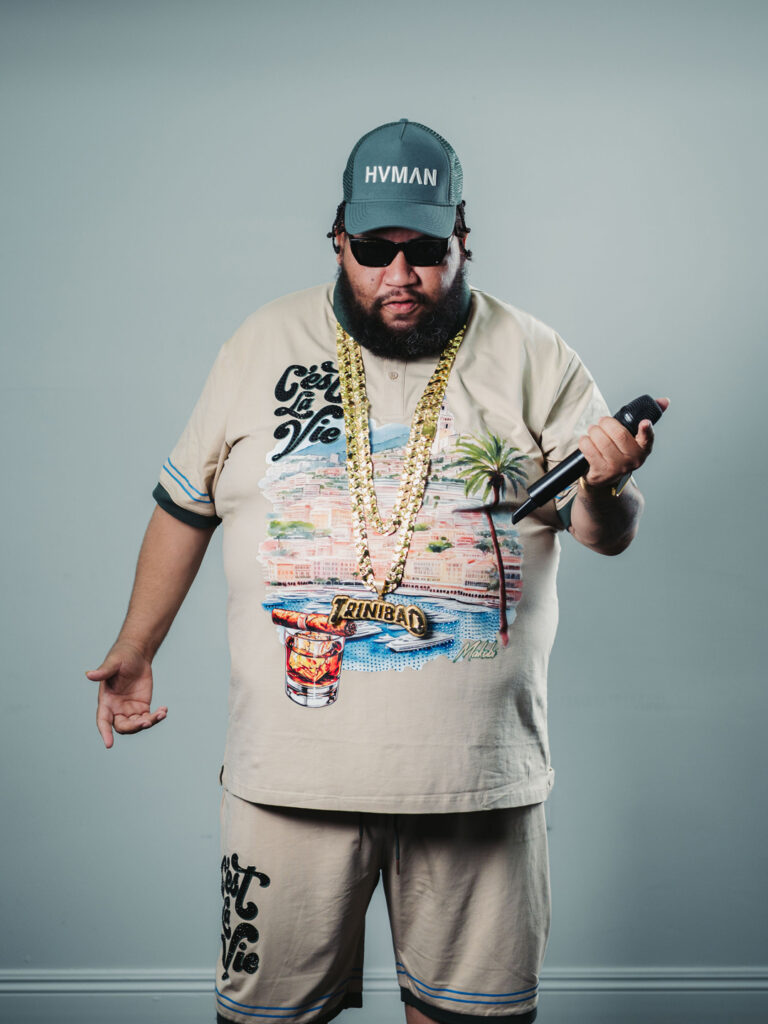
These heavy-handed restrictions stand in stark contrast to his international reception. Punz continues to tour the region extensively and has expanded his footprint globally, particularly as Paris has developed a booming, highly receptive Trinibad scene.
To demystify the stigma, one must look at the word “Trinibad” itself. While “bad” denotatively implies something harmful, in Caribbean patois it connotatively means stylistically appealing, alluring, or excellent. The name utilizes the word as a term of endearment and satisfaction, not literal malice.
Art history proves that socioeconomic crises consistently breed revolutionary art. Just as German Expressionism arose from the socio-political tensions of World War II, Trinibad emerged in 2020 amidst the devastating economic impacts of COVID-19, when Trinidad & Tobago’s GDP declined by 7.8%.
This phenomenon aligns with the psychological concept of sublimation, championed by Plato and Sigmund Freud—which is the process of converting harsh realities into culturally acceptable artistic expression. Trinibad is a sublimation of daily socioeconomic hardships. As Freud posited, artists channel inner and environmental conflicts into symbolic forms that resonate with the public. The immense popularity of Trinibad proves it strikes a cathartic chord with Caribbean youth, serving as an alternative to repression.
There is no empirical evidence linking music directly to crime rates, but ample evidence connects crime to systemic poverty and unemployment. With Trinidad & Tobago’s poverty rate at a staggering 16.7%, targeting music serves as a convenient scapegoat for deep-rooted societal failures.
While national security must be protected, these bans misstep by punishing an innocent creative for his association with an enigmatic genre. Punz acts primarily as a producer and MC to energize crowds—he is not a recording artist, nor does he have a criminal record.
In the pursuit of a unified Caribbean identity, regional authorities must distinguish between positive cultural entrepreneurs like Punz and those with destructive motives. Suppressing hardworking creatives only breeds the very isolation and resentment that society seeks to eradicate.